
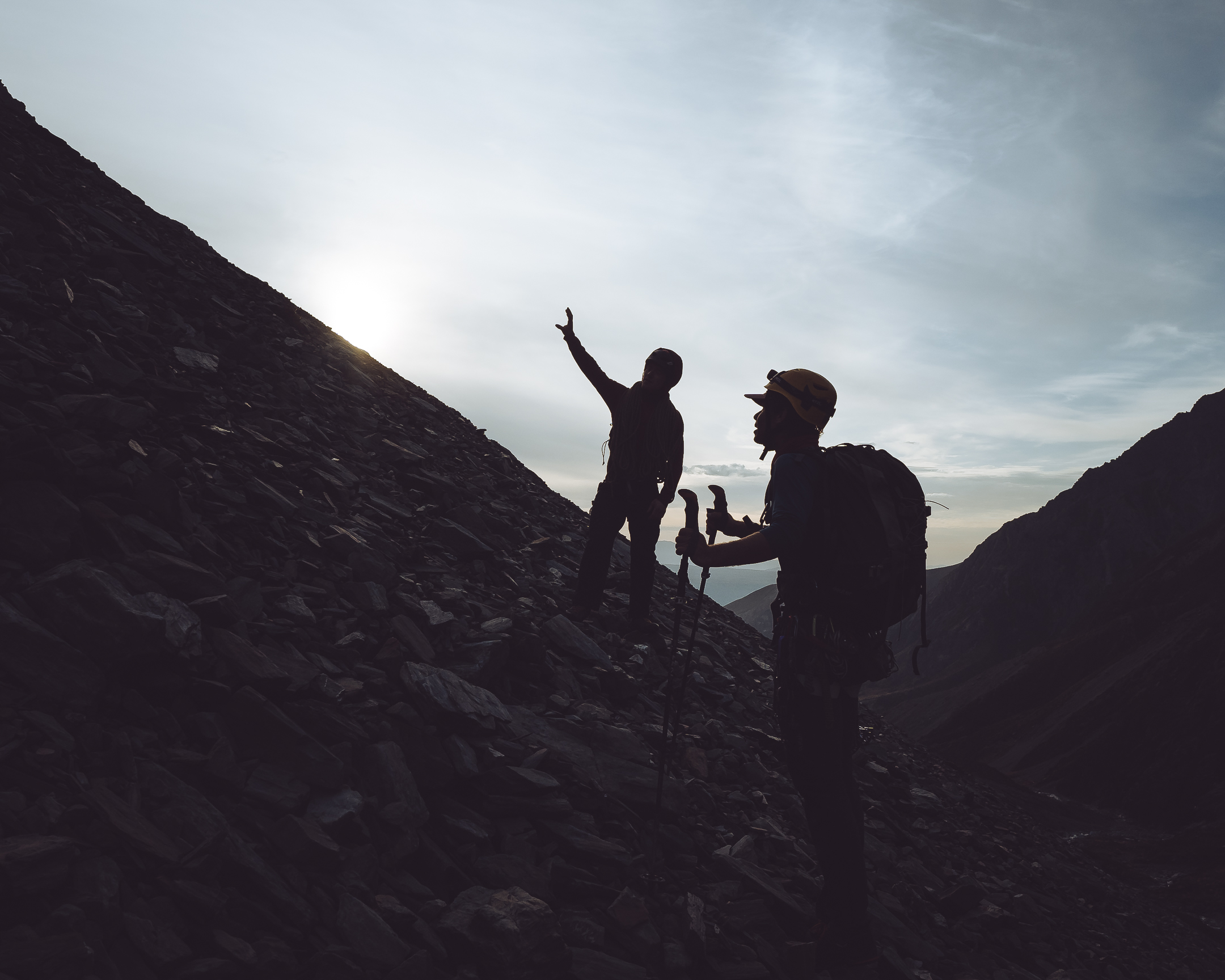
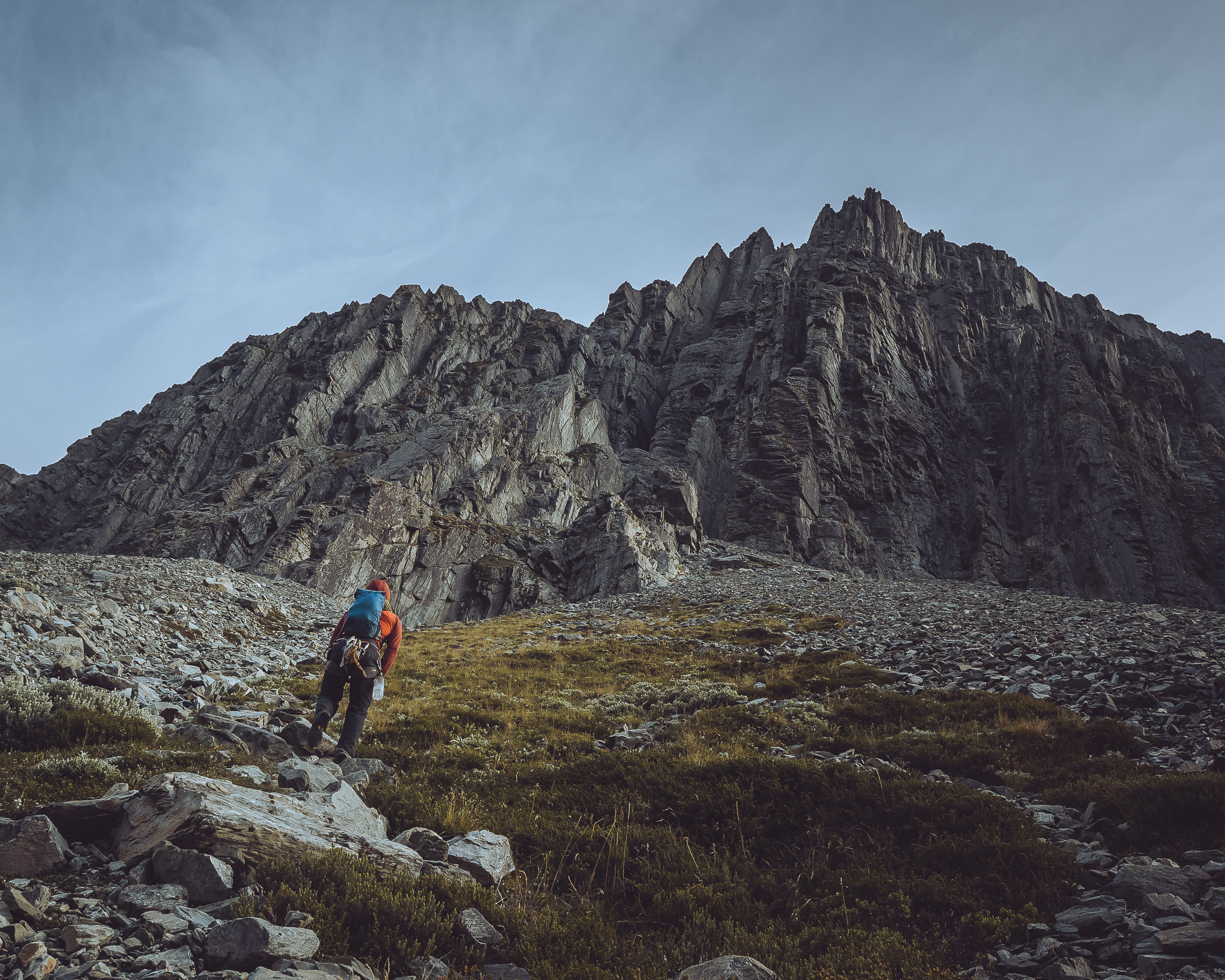
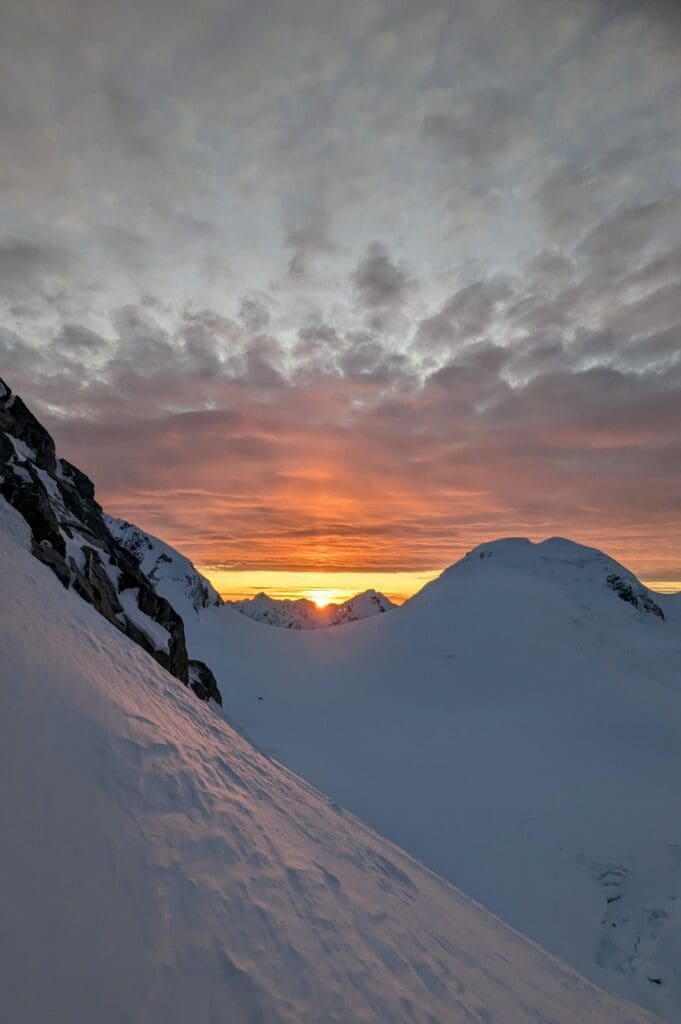
This is a proper flashback, one of those trips that I probably won’t ever forget.
In August 2023, our little crew of three had come off a strong start to the winter. We’d climbed plenty of steep ice and mixed routes in Wye Creek and on the West Face of Remarkables, and we felt strong; ready for something bigger.
The forecast was looking excellent. A large and slow moving high-pressure system was moving over the country, with calm weather and no obvious bad days on the horizon. We flew into Tasman Saddle Hut with eight days of food, alpine climbing gear and skis.
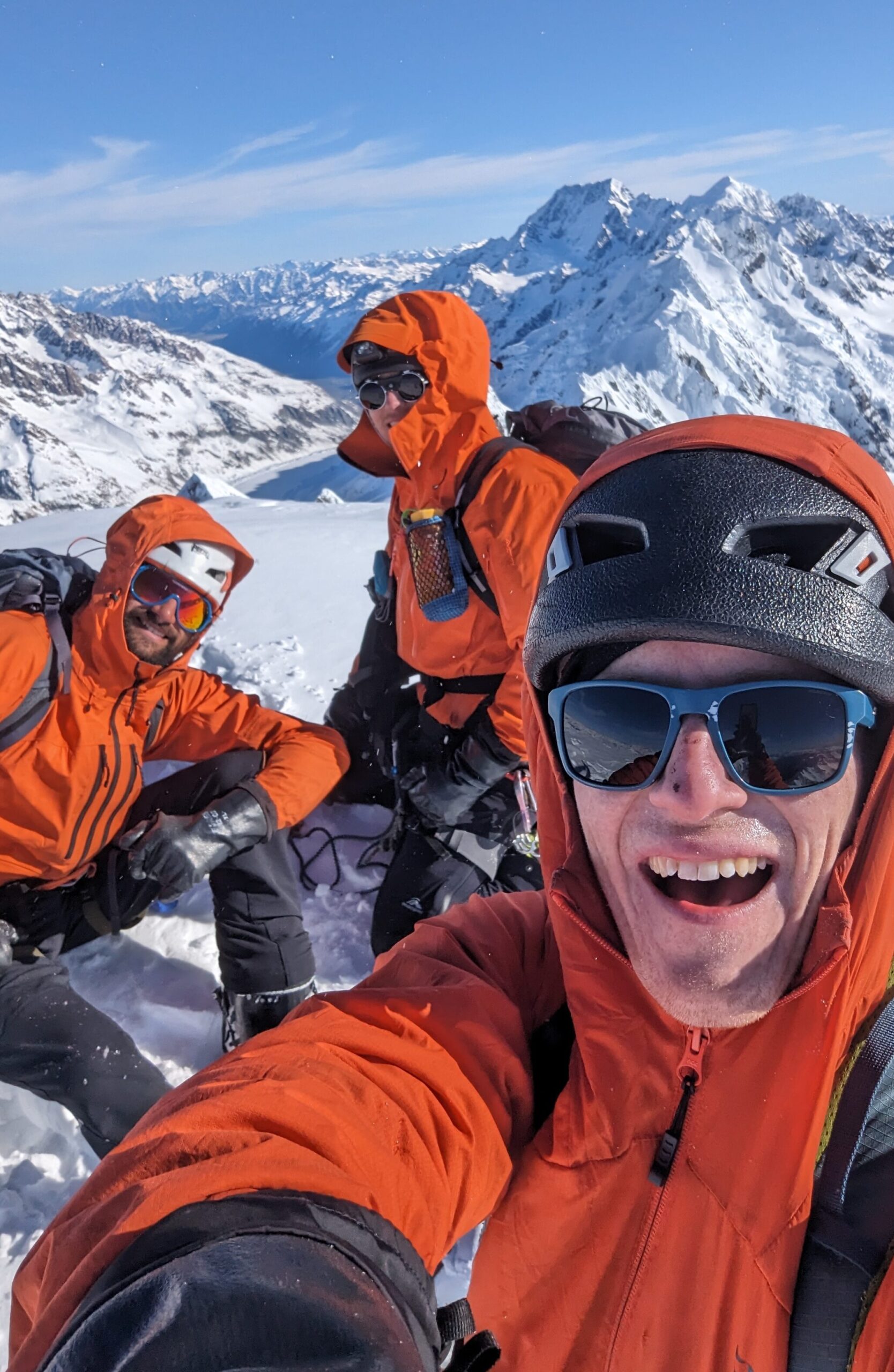
As it turned out, we would end up spending five days up there without a single bad-weather day. It was myself, Justin: a strong and reliable climbing partner of mine for many years, and his good friend Pat. Pat was less experienced than Justin and I, but he was capable, motivated and keen for the adventure.
We flew in during the afternoon, dropped our gear and went out for a recce. We skied up towards the south base of Mt Walter to check out the ice conditions and were happy with what we found. The plan for the following morning was obvious: Ice Creme, the classic ice line on the face.
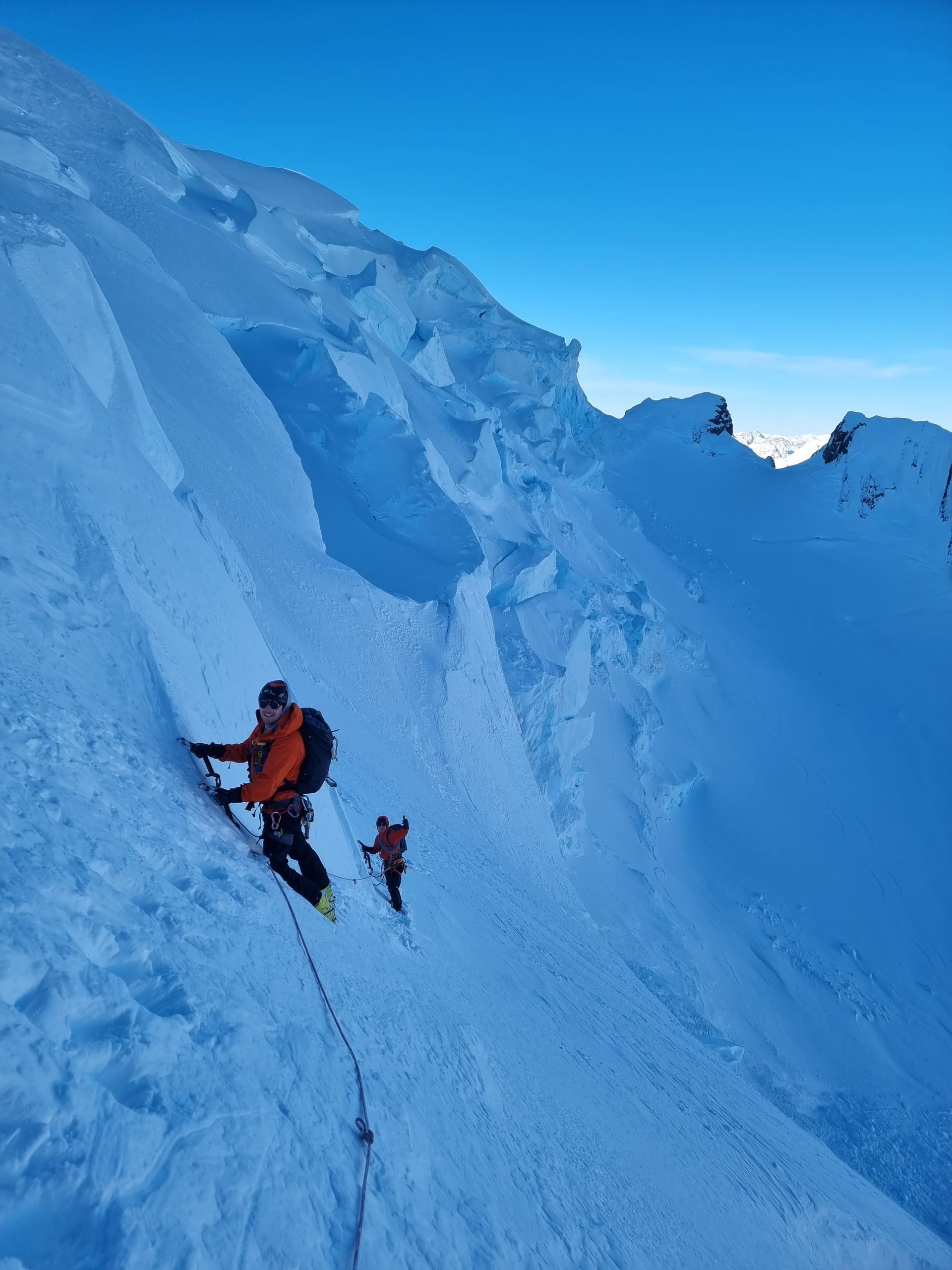
Ice Creme is around 400 metres long and graded Mt Cook Grade 4+. The ice is aerated and neve-like (hence the name), making for excellent first time placements for the climbing but providing less-than-ideal confidence in your ice-screws. The next morning we climbed it in good style, Justin and I swinging leads all the way up.
We were climbing efficiently and having a great time. After topping out on Ice Creme, we made our way back down to the col between Mt’s Elie and Walter. By the time we reached the saddle, we’d climbed with enough enthusiasm and efficiency that we still had plenty of energy left.
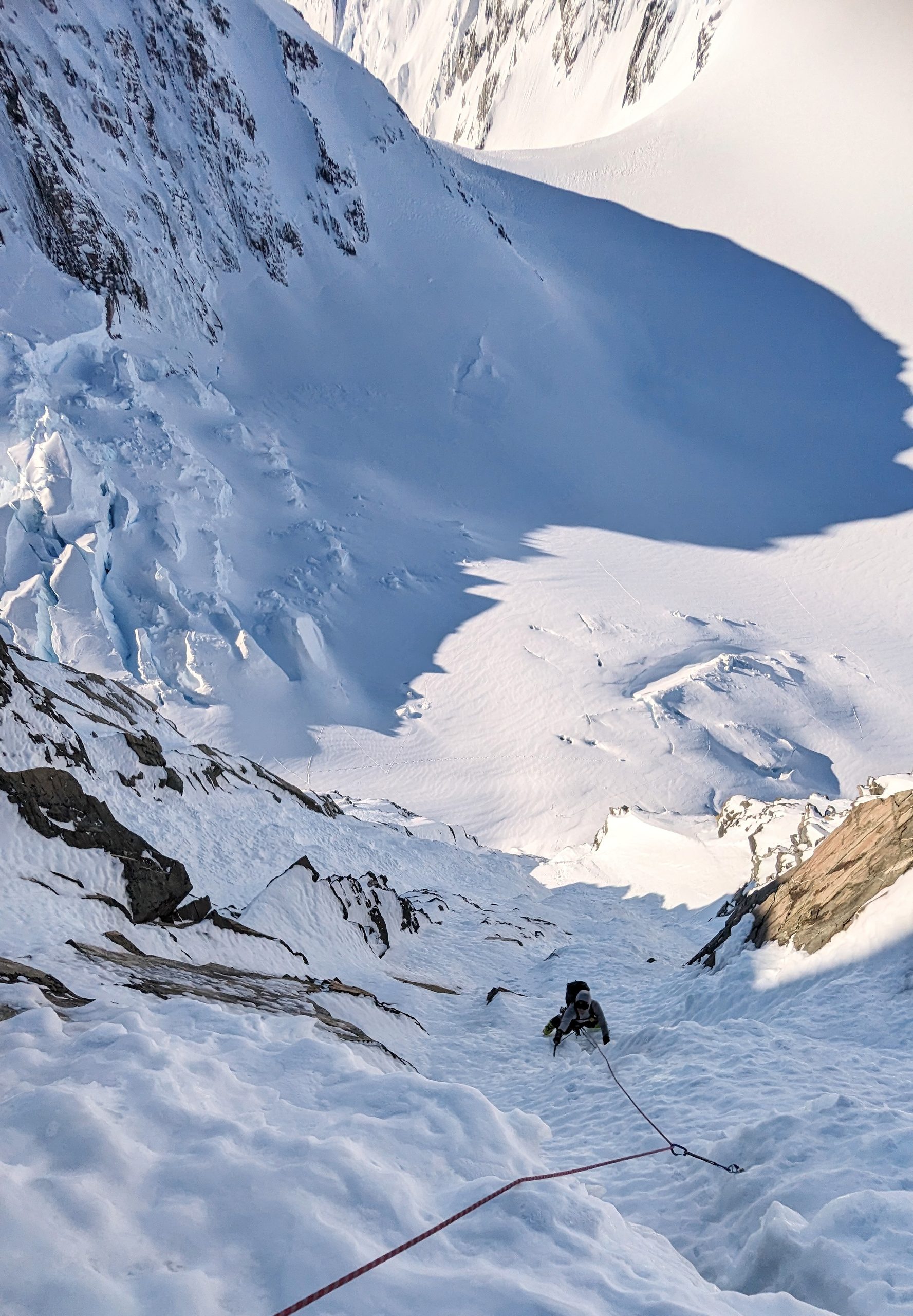
So we made a spontaneous decision. We ditched the heavier gear and made a dash for the summit of Elie de Beaumont. We soloed the remaining terrain to the summit and were rewarded with one of the most special summit experiences I’ve had.
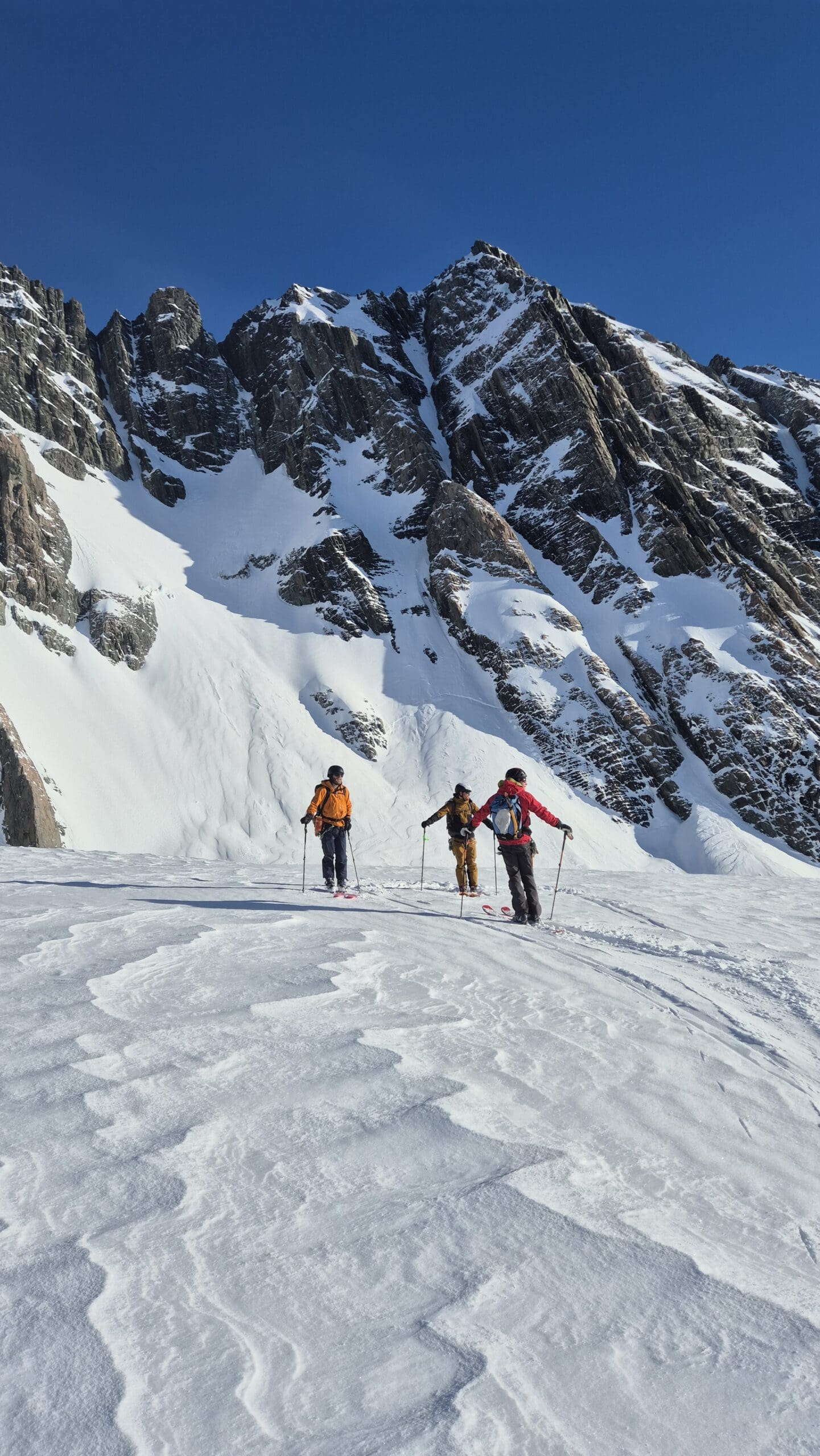
There was no wind. The light was incredible, the clouds were sitting beautifully across the landscape, stretching far out into the Tasman Sea in a layer of white, luminous fluff. After the effort of the day, and the ease in which everything happened, it felt like we were completely at home up high. Eventually, we tore ourselves away from that special palace and made quick time back to our bags and skis. The following day, Justin and I wanted to go skiing, so we headed towards Mt Green’s well-known east face.
After assessing the snowpack deciding the conditions were stable enough, we boot-packed up a steep snow slope. This leads to a fantastic snowy arete, like a catwalk in the sky, it leads you up on to the basin under Mt Green’s east face. We then re-assessed snowpack conditions, and decided it was good enough for us. After a short but steep bootpack up to the summit, we skied the east face before continuing down under the south face. Around 1,000 metres of boot-deep powder from the top of Mt Green to the Tasman Glacier. This felt like a significant ski for us.For me, it had even greater significance. It was the final ski I needed for my ski guiding logbook.
After a huge day of climbing, summiting and skiing, getting back to the hut and cracking a beer was a pretty satisfying feeling. 2 awesome days out of 2!
Upon planning for the next day’s activities, I suggested to Justin that we go and try a smear of ice on the south face of Mt Green. It was as far as I knew, unclimbed. I’d never seen it in this condition, and I’d never seen it mentioned in any guidebook or trip report.
But there it was: what looked to be a roughly 40-metre smear of ice forming on a steep slab. It linked the lower face and rock band to the upper slopes, allowing one continuous line from top to bottom, in an area where no other route was known. I showed Justin some photos and suggested we go and have a look. Justin didn’t take much convincing.
Pat was feeling more rested and wanted to come along, either to climb it himself or support us on the journey. The next morning we woke before dawn, and made our way back towards the saddle below Mt Green’s east face.
Once we reached the saddle, Pat, after having looked at the climb, decided he would take photos.We ditched our skis and descended onto the glacial ramp that provides access to the south face.
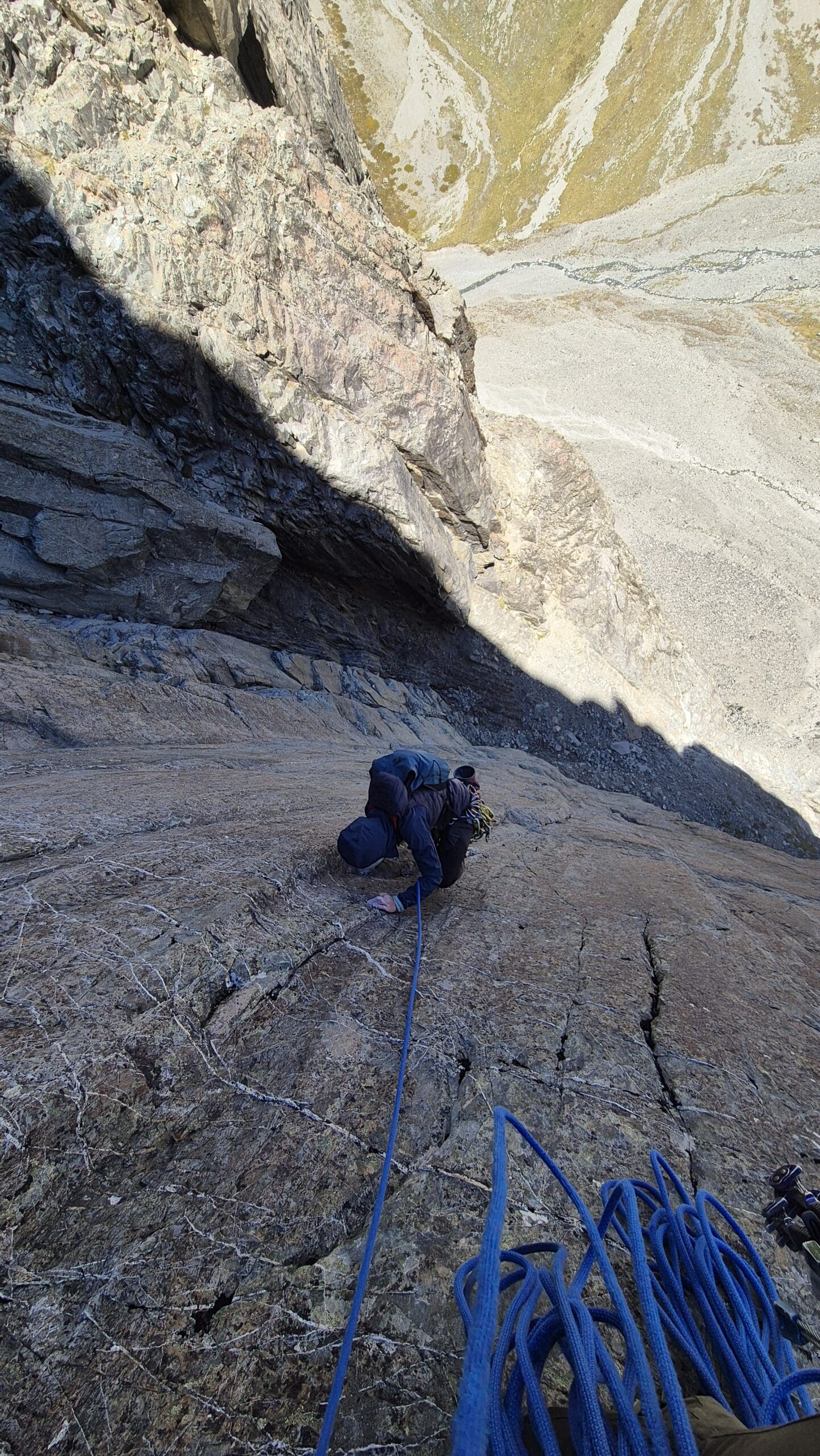
We roped up. I took the rack, and led the first pitch, around 30 metres, with a couple of steep moves immediately off the ground before easier gully climbing above. I brought Justin up, and we looked up at what we expected to be the crux. The ice was forming over a steep slab that reared back dramatically. The underlying rock was probably just off vertical, but the way the ice had formed made it feel almost overhanging.
The ice was fascinating. Large blobs provided the best tool placements and the occasional opportunity for an ice screw, but between those features the ice was thin. That meant some sections had to be run out, and the climbing demanded a delicate touch.
Justin took the lead and climbed it in excellent style. Following him was an absolute joy. It was technical and pumpy, and you definitely couldn’t afford to overswing your tools or climb aggressively.
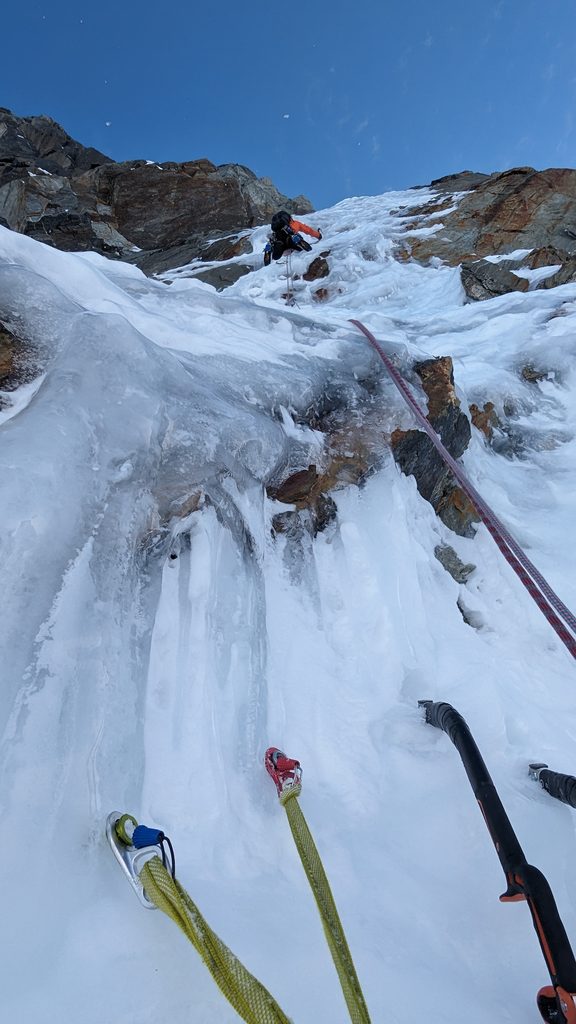
When I reached the belay, we gave each other a big high five. We knew the route was going to go. From there, I took the lead and we simul-climbed around 100 metres of WI3 before branching right through some rocky terrain.
Justin chose to lead directly up a rock step, around M4 to M4+, before handing the lead back to me. I continued towards the base of the summit headwall and upper snow slopes. The climbing became a little trickier again, only around M3 but with powdery snow and relatively poor protection. Justin then led a short WI3+ step before we transitioned onto easier ground and post-holed the final 100 metres of snow slope to the summit. Mt Green summit in two days and from two different ways!
The crux was definitely the money pitch, but the rest of the route was engaging without being relentlessly difficult. That combination made it particularly appealing, interesting climbing, a standout technical pitch but a relatively low commitment overall. We thought it was a really good route.
Afterwards, I checked through the available information and spoke with members of the climbing community. As far as we could tell, there was no record of the line having been climbed, and nobody has disputed it being a new route. So, we believe we’d found a new line.
We called it Chocolate Cake, Mount Cook Grade 5. We felt it was a fitting name to the other route we had climbed and I had also crammed a chocolate cake into my food box at the last minute, and it became a bit of a joke the whole trip. The descent was straightforward via the east face of Mt Green, followed by a ski back to the hut. We were home after around ten hours.
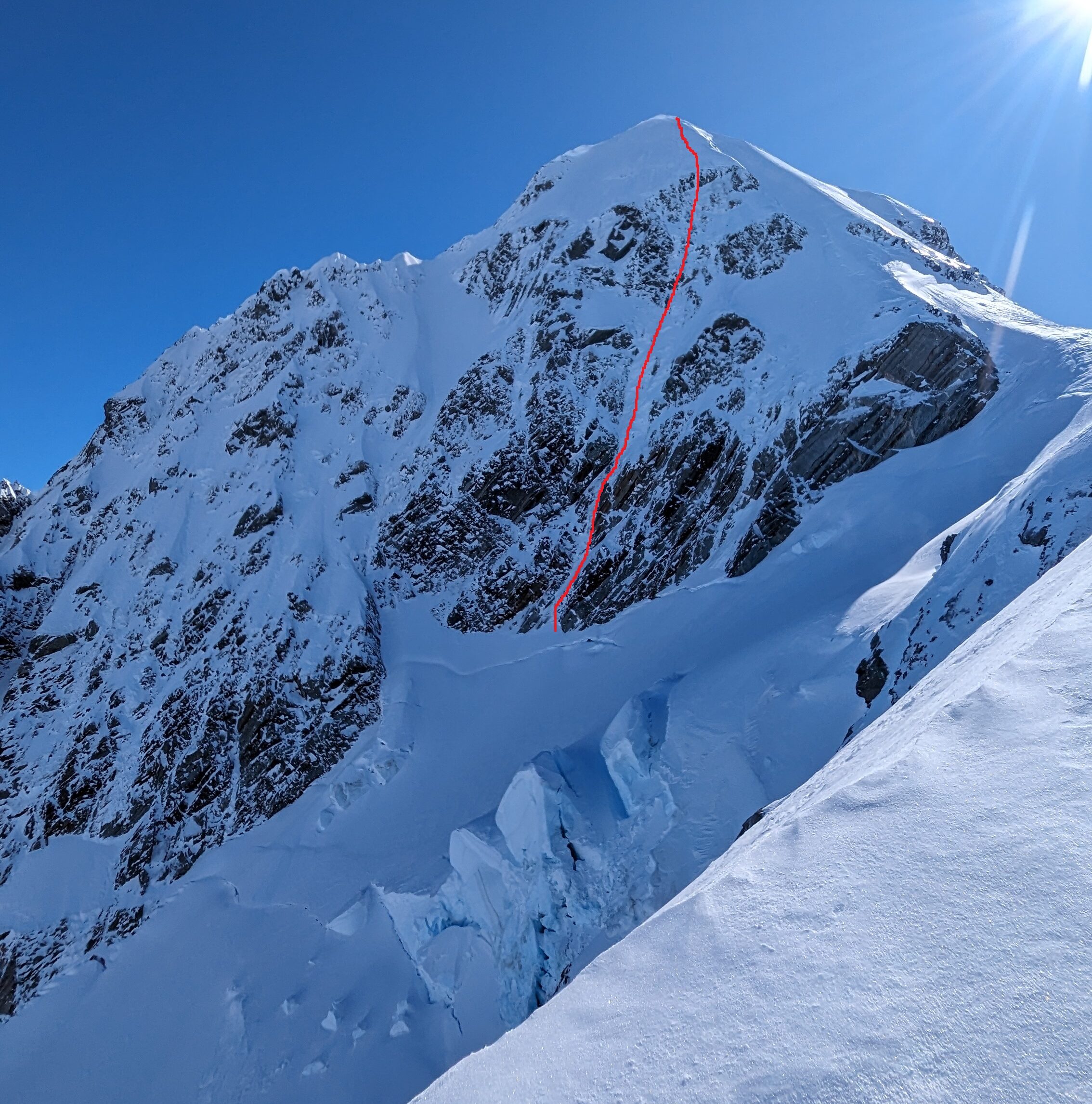
For Justin and me, though, the route represented something much bigger than simply another day out. Putting up a new route in Aoraki National Park had been something we’d both wanted to do for a long time. To do it in winter, on an alpine peak, was a genuine bucket-list objective.
It felt like a culmination of a lot of what I’d been working towards as an alpinist.
We’d spent the previous seasons building fitness, skills and experience, and suddenly we were standing underneath a line we’d never seen formed before, climbing it in good conditions and putting our own route into the mountains.
There was something so complete about the whole trip. The perfect weather, classic ice climbing, a summit in beautiful evening light, deep powder skiing, good people in the huts, and finally a new route.
A pretty good way to spend five days in the high places I love.
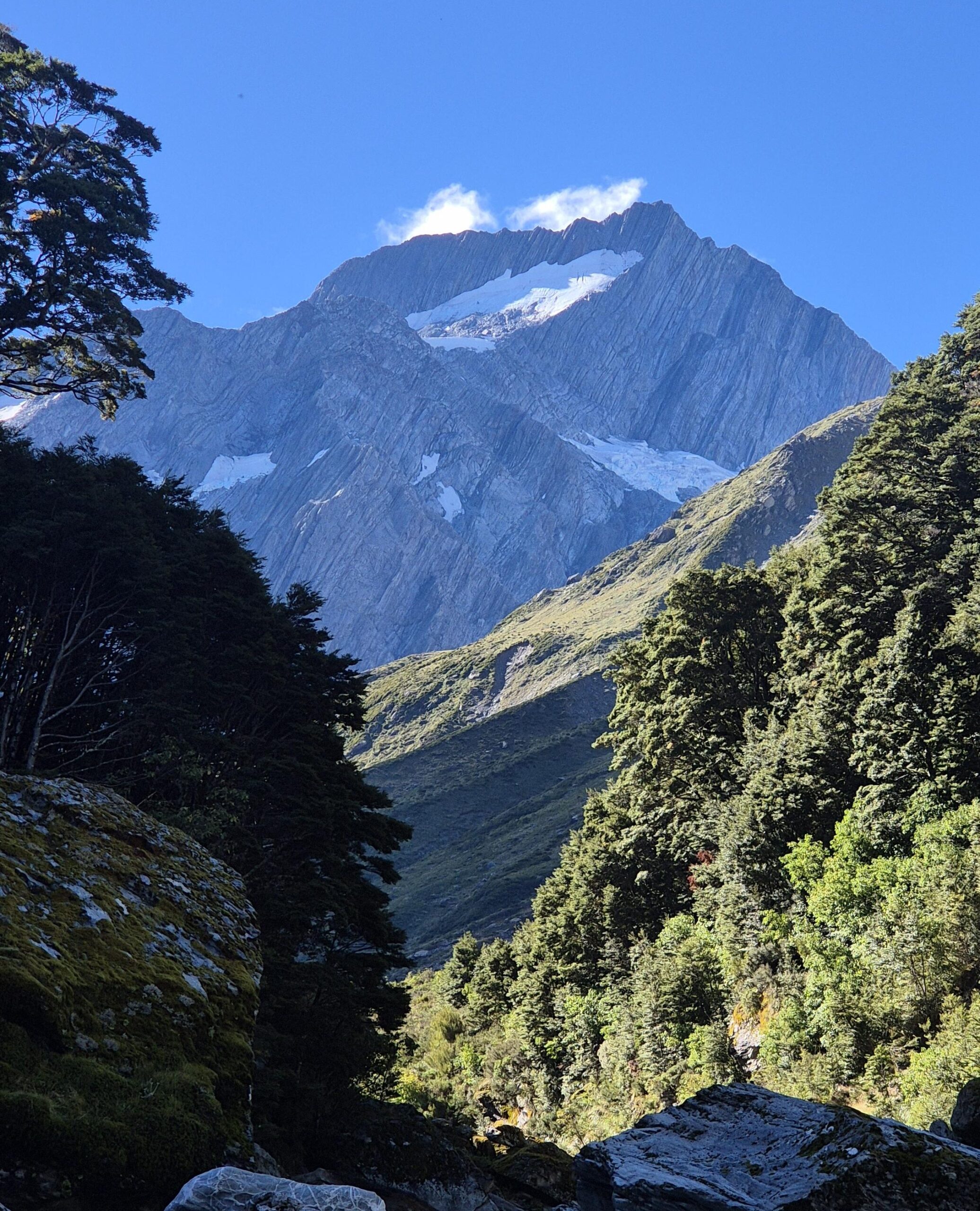
Mt Ward is a striking peak. As you enter the Hopkins Valley near Ram Hill, it stands out as a square-edged summit ridge, the prominent feature, center of frame. Its steep southern aspects stand dark against the sky, the glint of a remnant glacier hanging from its side. It looks distant, but it also looks proud, like a small reflection of its much larger northern neighbour.
I’d been eyeing Mt Ward for a couple of seasons and knew I’d eventually give it a go. The real appeal was a west-to-east traverse, climbing the Northwest Chimney, which supposedly offered good-quality rock and moderate climbing before following the beautiful summit ridge.I knew the eastern side would be considerably chossier, but suspected it wouldn’t be too difficult to descend on-sight. Eventually, everything lined up.
I’d been spending some time learning to ride a motorbike well enough to travel up river valleys, and Mt Ward felt like a pretty good culmination of that process. I’m certainly no motocross rider, but by this point I could hold my own through relatively deep New Zealand rivers on my 250cc farm bike.
Grace and I took one bike, while George and Brooke took the other.
We made quick time up to Elcho Hut, taking around two hours to ride a journey that would roughly be a full day’s travel on foot. The river crossings were the trickiest part. You don’t want to get a motorbike stuck in too strong or deep of a current, dropping the bike can quickly turn an efficient approach into an engine-recovery exercise.
From Elcho Hut, we continued on foot up North Elcho Stream. After around six hours of boulder hopping, stream crossings and general route finding faffery, we made camp about 600m below Elcho Pass.
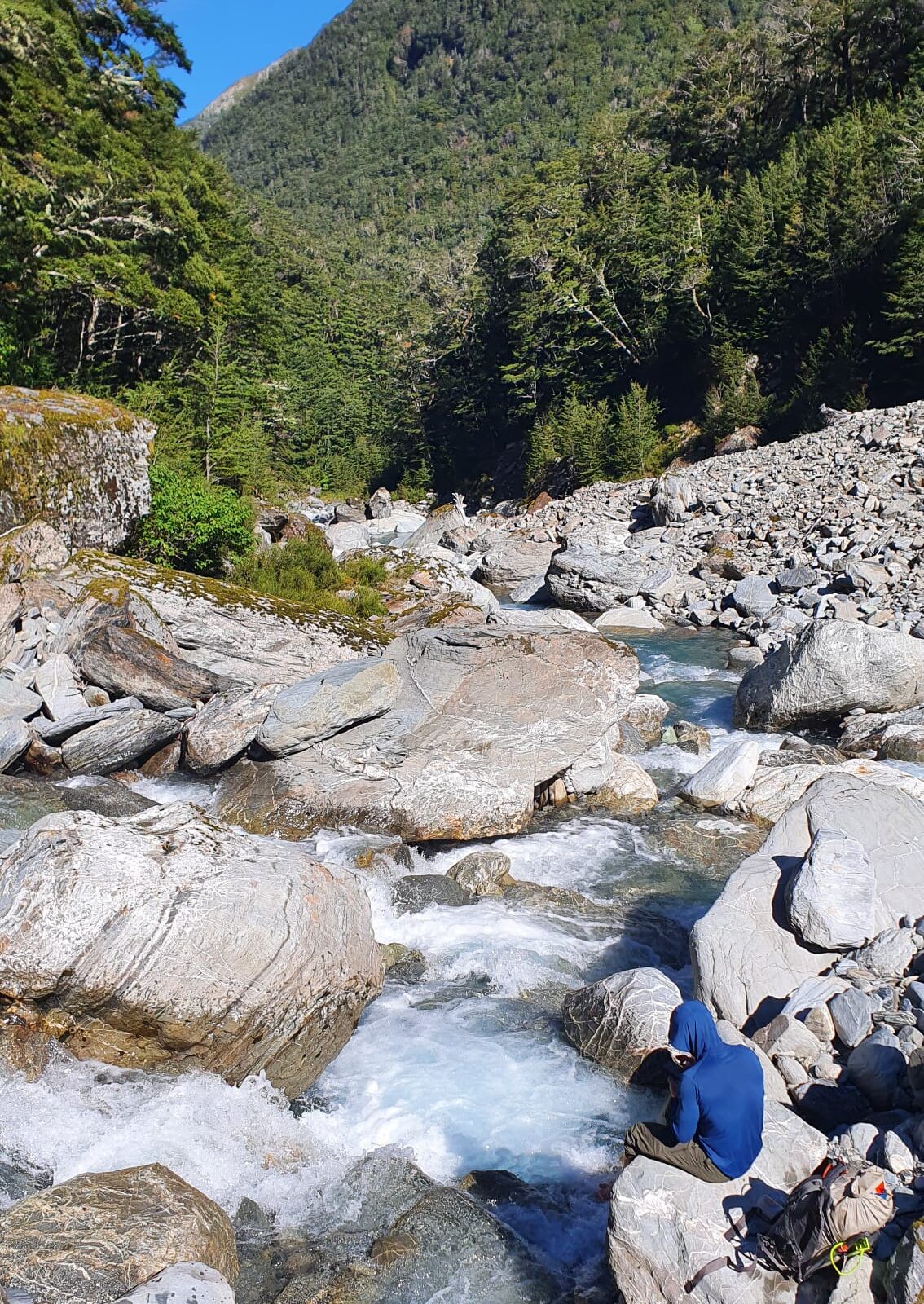
The following morning, we rose early and started towards the traverse. We made reasonable time up to the saddle, although it was hard work on steep scree and tussock. From there, open basins led us around towards the western aspects of Mt Ward and Mt Dundas.
The terrain became more technical as we scrambled upwards and then onto an unnamed remnant glacier on the western slopes of Mt Ward. It is essentially a patch of very firm, old ice. The glacier travel was a little awkward, but there were no particularly deep or daunting crevasses and the obvious obstacles were easy enough to navigate around. By the time we reached the base of the northwest chimney, we’d already been moving for around five hours.
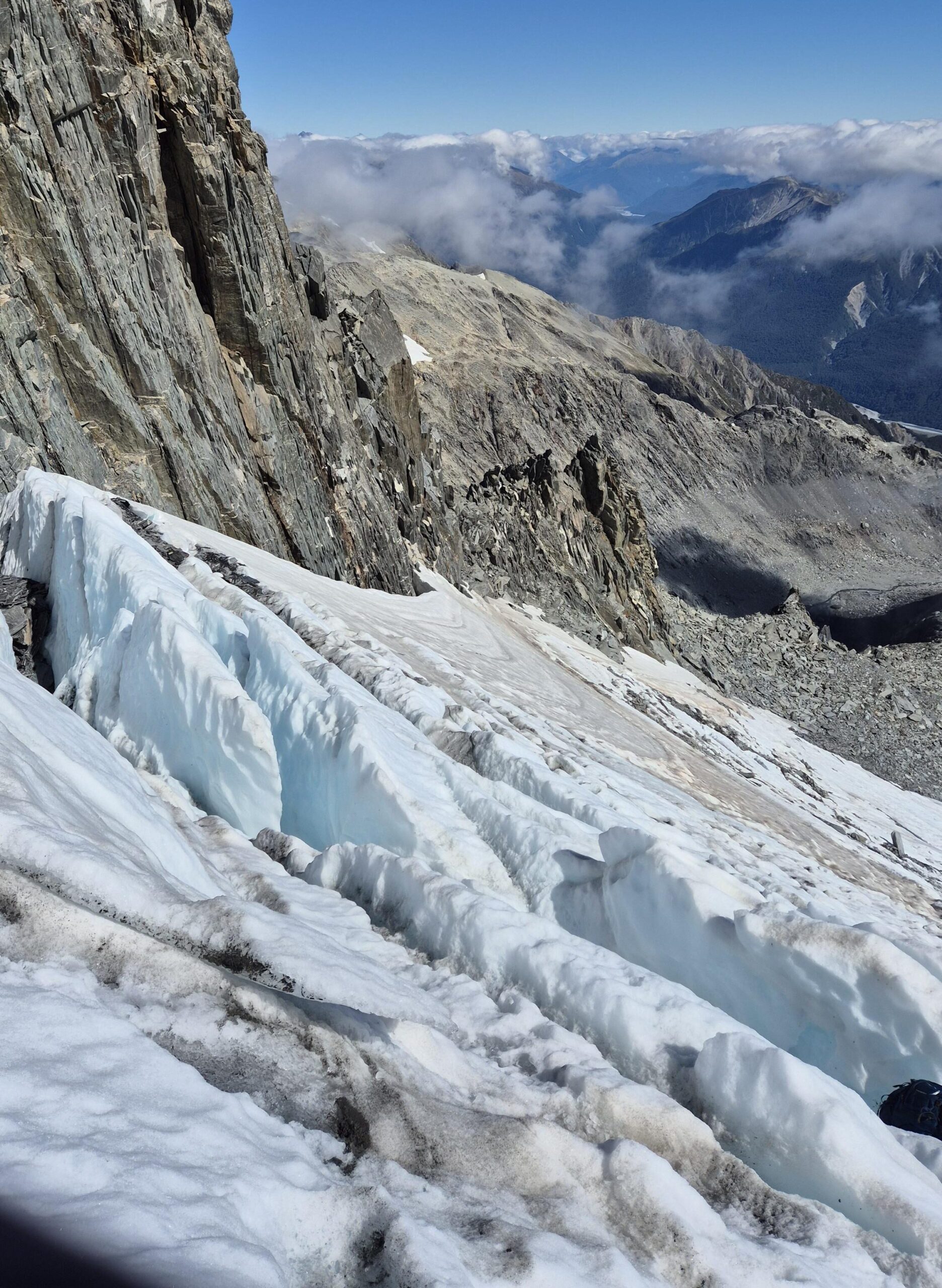
The technical climbing was about to begin.
There was around 150 metres of technical climbing in the chimney. We believed we were following the line of least resistance, although I would assume there are several possible variations, depending on your skill, and equipment.
The climbing itself wasn’t particularly sustained, but it was often runout and good stances for anchors weren’t easy to find. There was one standout Grade 16–17 move, essentially a one-move wonder, which probably felt a little harder than it otherwise would have in mountain boots with a heavy pack. Fortunately, I found one good piece of protection for it.
After the chimney, another short section of scrambling brought us to the final pitch to the summit ridge. This was the standout pitch of the route. A beautiful hand crack climbed up and around a small rooflet, with excellent rock and great protection. It was exactly the sort of pitch you hope to find high on a mountain. Once we topped out, we packed the rope away and started along the summit ridge.
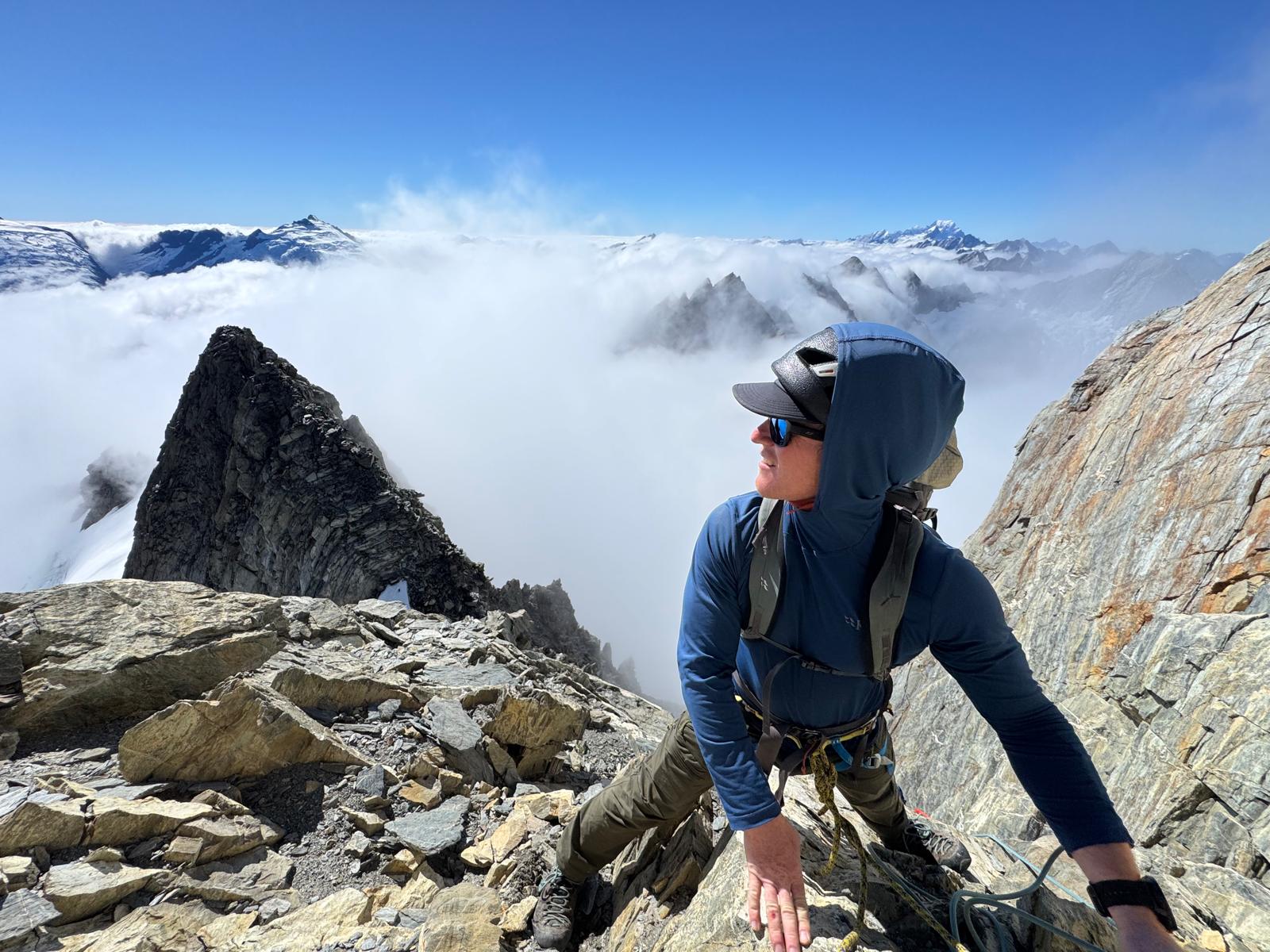
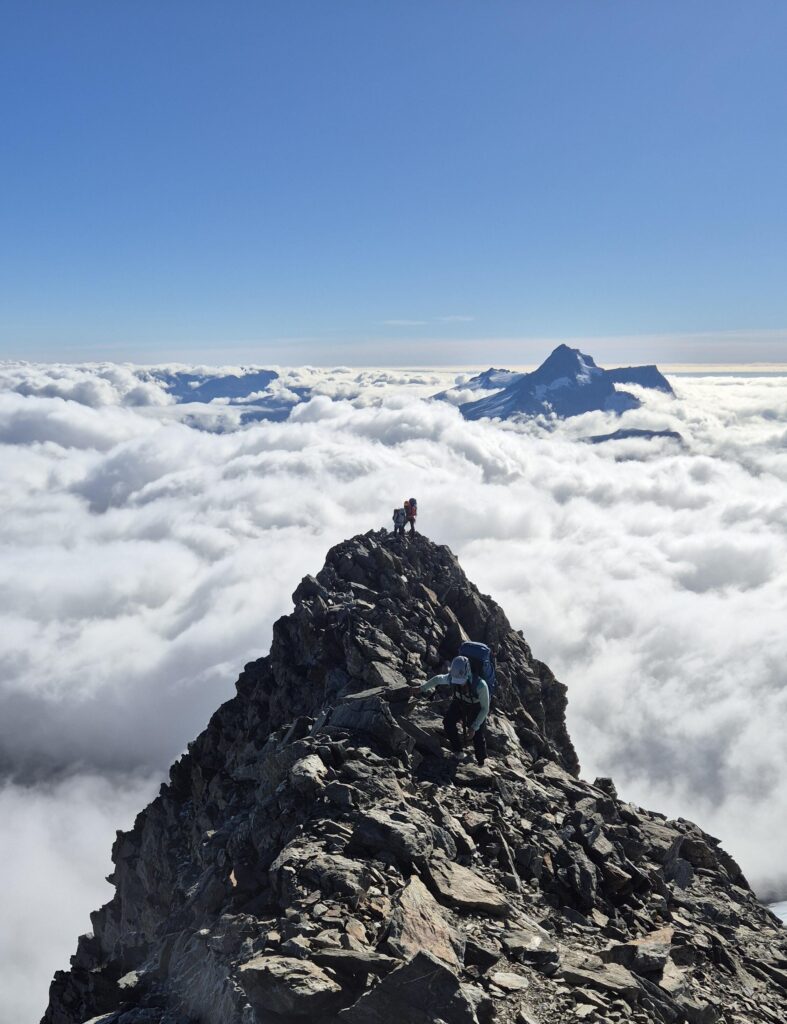
The guidebooks describe parts of the ridge as being wide enough to park a bus on. Depending on what sort of bus you’re talking about, I reckon that’s probably true. For the most part, though, it felt more like walking along a comfortable footpath, albeit one suspended high above the surrounding valleys. It genuinely felt like walking on top of the world.
What followed was one of the most incredible views of the Main Divide I’ve witnessed.
A bank of West Coast jungle mist was spilling over the divide, while above us the sun shone brightly in a completely windless sky. Standing on the broad summit ridge, it felt as though we’d climbed onto the tower of some enormous natural wall.We took our time wandering along the ridge, spending around 45 minutes to an hour enjoying it. Eventually, though, the ridge became more technical again.
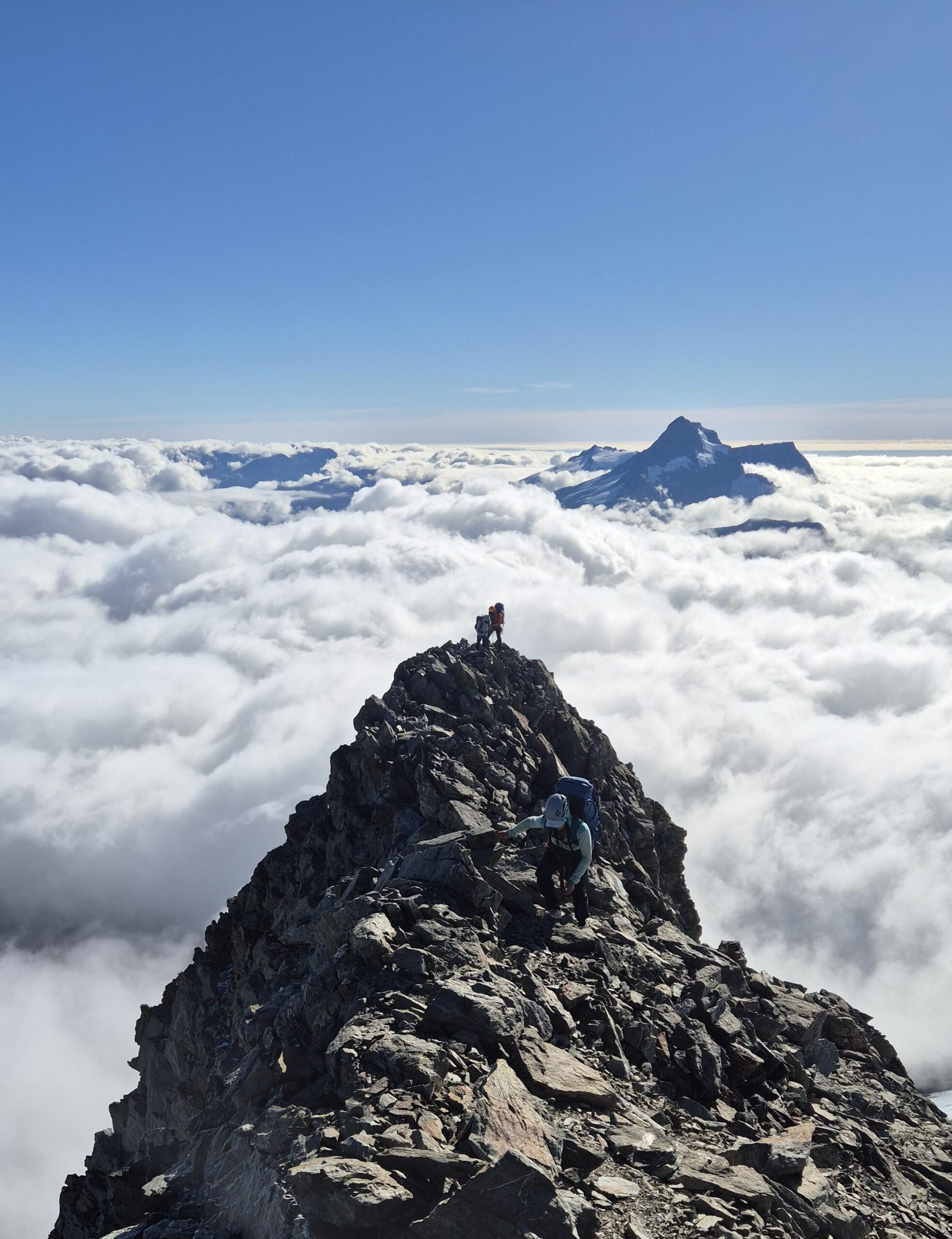
There were some tricky sections of downclimbing and rappelling through an area where it appeared that part of the ridge had fallen away. The rock quality varied considerably, with the northern side tending towards loose choss while the southern side generally offered better rock. Eventually we reached the true summit. From there, it became obvious that the east-ridge descent was going to be considerably looser than the climbing we’d done on the western side.
The group was starting to feel the length of the day, but we rallied and decided to make the most of the remaining daylight. The plan was to tackle as much of the technical descent as possible while we still had light, then find somewhere suitable to sit out the night.
On the final tricky section, there was a roughly 10-metre traverse over a gaping void. The handholds were big and positive, but the feet were little more than scrabbling around on gravel. One of the handholds blew out. I fell away from the face until my protection caught me. I was fine, but it was definitely a scary moment.
Thankfully, we’d soon made it through the technical climbing and were left with fairly easy but fairly exposed downclimbing through hanging benches of scree.
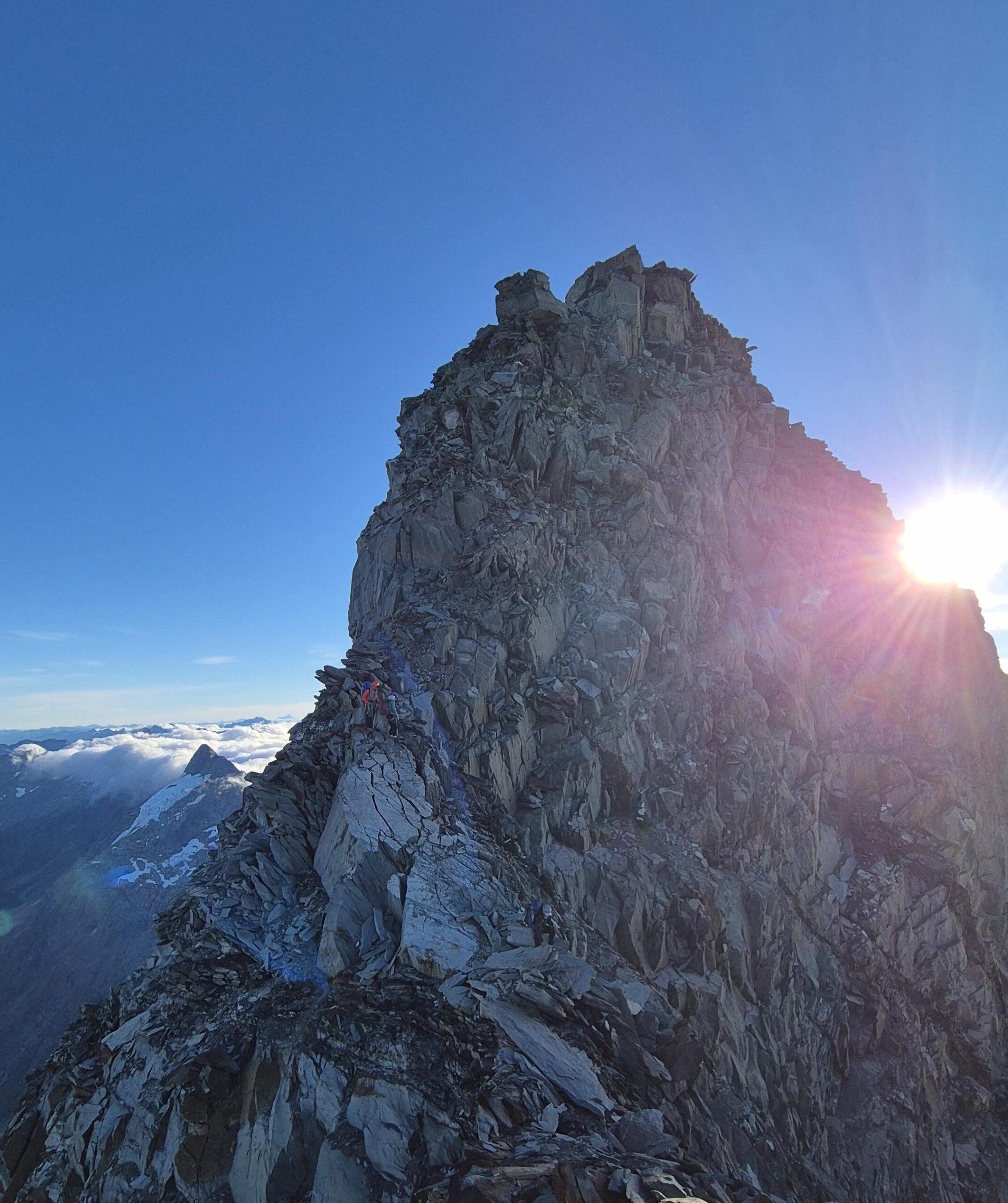
Eventually the daylight disappeared and the head torches came out. About an hour later, we found what looked like our best option for the night. It wasn’t exactly a bivy I’d mark on the map, but it would do.
We were able to sit with our backs against a sloping wall, and our legs hanging out over the edge. Each pair built their own anchor, and we clipped ourselves, our gear and everything else in for the night. Fortunately, it was a relatively mild, windless evening, so we weren’t too cold.We managed to scrape together a few hours of sleep.
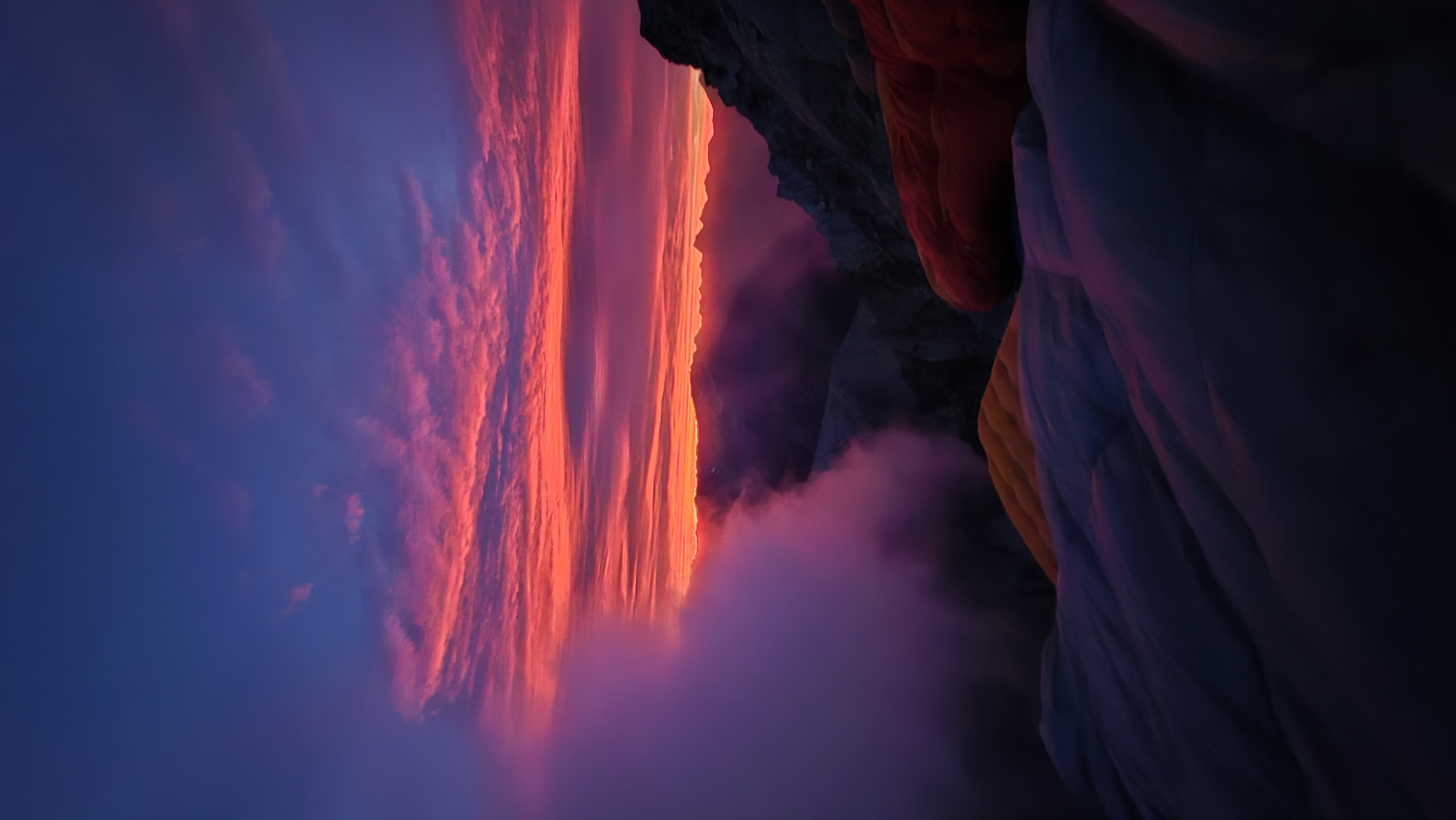
Sleeping high on a mountain has certain benefits. The sunset and sunrise were spectacular, not necessarily because of any single view, but because of the colours, the atmosphere and the unexpected awesomeness of our predicament. There was something pretty special about waking up perched on the side of Mt Ward, being exactly where we were and knowing what we’d just climbed. The following morning, we continued down towards tussock country.
We crossed the remains of the Foster Glacier, which was straightforward enough, and from there the terrain became mostly walking and scrambling.
George and Brooke had another plan.George had carried his paraglider all the way across the mountain, and with conditions looking good, they pulled it out. Happy Birthday Brooke! They launched right in front of us, taking some of our heavier gear with them, and were down in the valley barely ten minutes later.
Grace and I continued our descent on foot. A couple of hours later, George met us on the motorbikes and took us back to Elcho Hut, where we’d left some food for dinner. The following morning, we rode the bikes back down the valley to the car.
Mt Ward was a fantastic trip, easily one of the highest-quality mountain adventures I’ve done in the last few years. I think what made it so good was the breadth of the experience.
The motorbike approach, having Elcho Hut as a base, the remote walk up the North Elcho and finally climbing a summit ridge I’d been staring at for several seasons all added something to the trip.
The climbing itself was engaging and fun, the summit ridge was spectacular, and the descent provided just enough uncertainty and adventure to keep things interesting.
Throw in an unplanned bivouac high on the mountain, a spectacular sunrise, and two friends flying a paraglider off the descent, and it becomes a pretty hard trip to beat.
Mt Ward is a stunning mountain with a stunning climb, and in my opinion it deserves to be considered a classic.
No Title
One of the greatest day adventures I’ve ever been on. I was a little nervous prior as I’d never really skied powder but Adam our guide eased us into it and I was hooting and laughing down the mountain within half a run. Well organized, safe and will definitely be doing it again with a bigger group of mates. Thanks for making me feel so fricken alive. Shout out again to Adam and Pete the pilot. Absolute legends.

No Title
Our guide Adam was AMAZING! He communicated expectations, assessed our intro abilities and took us down great slopes. The weather was awesome, the snow was perfect and lunch was delicious! I can’t imagine heliskiing getting any better than this! Top notch company and once in a lifetime experience!

No Title
Thankyou for an excellent 3 days. Lots of fun, great chats, and jointly indulging in the inner nerd – learned lots! The Remarkables GT was a grand day out.

No Title
I just wanted to say that I really enjoyed the trip with you! You are such a good blend of humour and professional approach to guiding in the mountains that makes the perfect blend. And you are a really good skier! I was also able to learn new things from you especially about avalanche and preparation. Look forward to a trip again! All the best and keep up the good work.

No Title
I was probably Adam’s first mentee, as good mates I approached him for advice on how I should go about gaining sponsorship. To cut a long story short; Adam encouraged me to back myself and pursue writing. I’m now a regular contributor to some of Australia’s premier outdoor publications, with a sponsorship from one of Australia’s big outdoor brands. It’s not just about the practical advice, its the knowledge that someone is in your corner, believing in you and encouraging you to have a crack.

No Title
The first step is always the hardest and Adam made it easier for me. Starting from scratch to now have a better understanding of mountaineering. Adam is always able to listen and provide good advice to help me reach my goals. The mentorship is very personal and specific to my ambitions. I really love it. I cant wait to continue to work with Adam and get closer to my goals!

No Title
I feel like your mentor program came at the perfect time for me and has been really encouraging to actually get the ball rolling with finding a partner and getting out there. I definitely don’t feel stuck like I did a few months ago.

No Title
Your mentorship has been awesome. It’s been really helpful to get feedback and discuss the training I have been doing. I feel the program is really dialled into what I want to achieve. The knowledge and stoke Adam has, really helps to keep the training drive going!

No Title
The support I’ve recieved has been incredibly beneficial. My climbing strength and skills have notably improved. You have helped me realize my goals are more attainable than I believed. Now I wake up with a clear purpose and how to pursue them.

No Title
It’s been a pleasure working with you and having you plan my training. I can tell how much you enjoy what you do. Your plans worked perfectly around my busy life and were able to adapt the plan if a hurdle presented itself. Grateful for your experience and eagerness to help me progress towards my goals.

No Title
Adam is an excellent coach. He is always willing to listen to you and share his vast knowledge and advice. An inspiring and motivational individual.
